July 11, 2026
Two-Week Check-in #7: Progress on all fronts
What's good everyone,
A bit of a late update, but things have been going quite well.
Headspace is getting to a good place. Mylz is moving along nicely. And for those who don't know: Mel (my co-founder, also my wife) is pregnant 🍼 (due in Nov), which means we're trying to squeeze every last drop out of these next months before mama brain arrives. She's critical to this whole thing, so, priorities (Mylz first, OBVIOUSLY. DON'T WORRY, SHE DOESN'T READ THIS NEWSLETTER).
Training's been good too. I finally found the balance between running and calisthenics + strength + dance (I think...) where my body doesn't feel like death after every run. Central nervous system has finally caught up. It doesn't hurt to run, and we call that a W.
Okay, onto what we've been building 👇
1. The 32g boards showed up 🔧
Our new accelerometers came in. This is the board we've been waiting on. The bump to 32g lets us capture the harder impacts without clipping, which matters a lot when you're strapping a sensor to a shoe that slams into pavement a few thousand times a run.
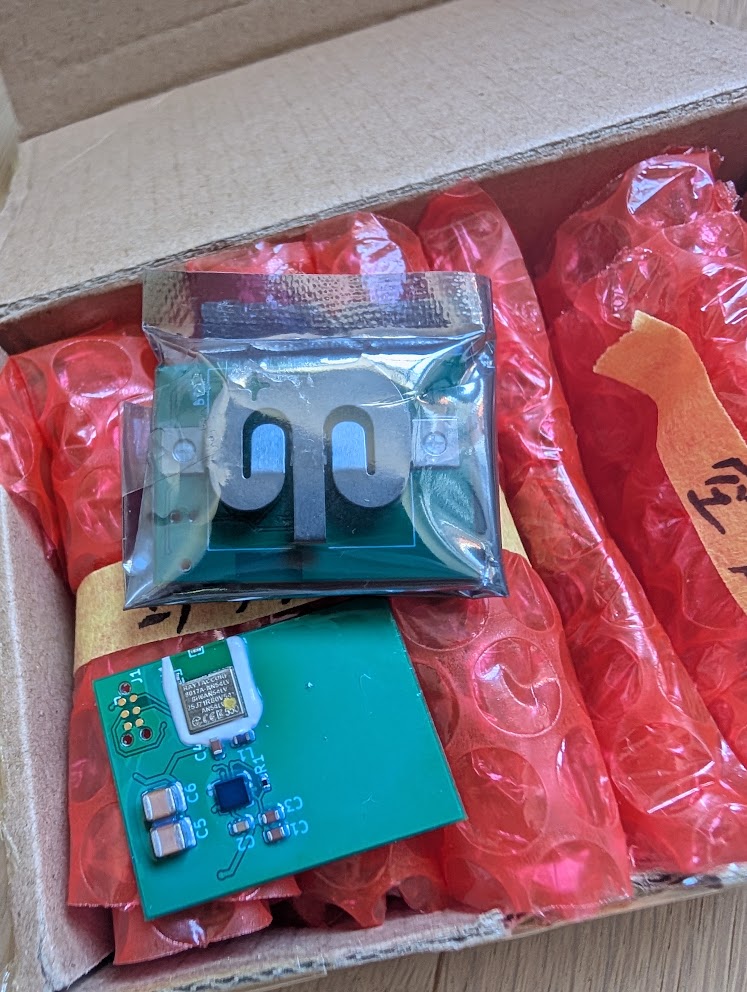
We're rewriting the firmware for it now → once that's done, we can run real testing with real people. Which means I'll be reaching out to some of you personally to help us log some Mylz. Stay tuned 👀
2. Scan a shoe, add a shoe 📸
Hardware is slow. Painfully slow next to software. So while we wait on boards, we've been making some dope stuff on the app.
Newest one: instead of hunting for your shoe in a dropdown list, you just point your camera at it and our visual recognition figures out what it is, usually with pretty high confidence. Works on running shoes, works on basically any halfway-popular shoe out there.
3. A bit of external validation 🤝
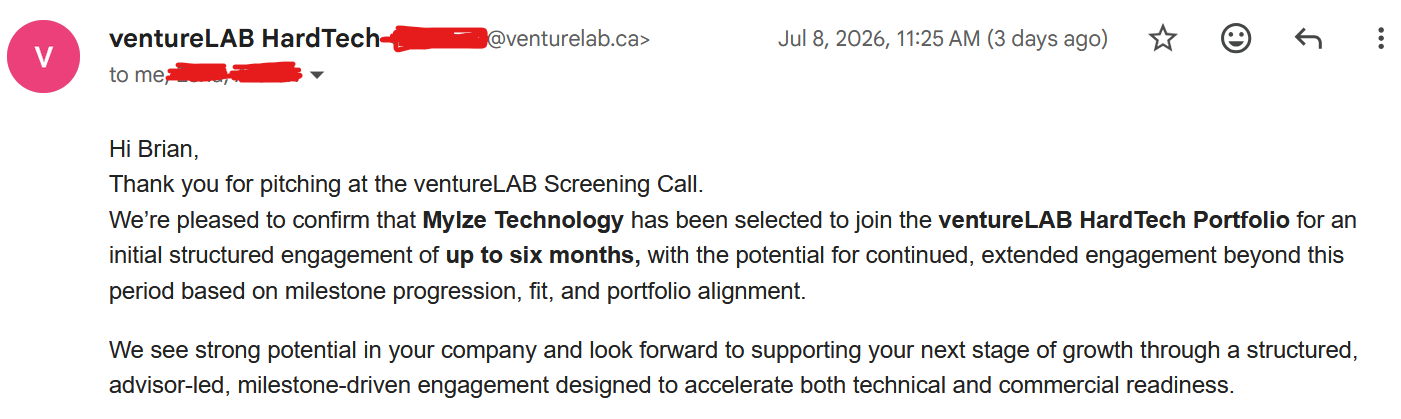
We got accepted into ventureLAB's HardTech Portfolio. It's a government-backed program up here, and the pull for us is really two things:
→ The network: investors, hardware people who've actually shipped, advisors, academics. Brains worth picking.
→ The lab: a few million dollars of equipment we get to borrow instead of buy. Better 3D printers for housing prototypes, an x-ray machine to find exactly where our solder joints crack, oscilloscopes to watch our capacitors behave (or misbehave).
Building in a blue ocean means you mostly have to believe in the thing yourself, so a little outside validation feels good.
Anyways. Stay true, stay tough. Talk soon.
Keep logging Mylz, Brian ✌️