
Shoe and Body, Measured Together
Everyone tracks how you run.We track how your shoes are changing your runs.
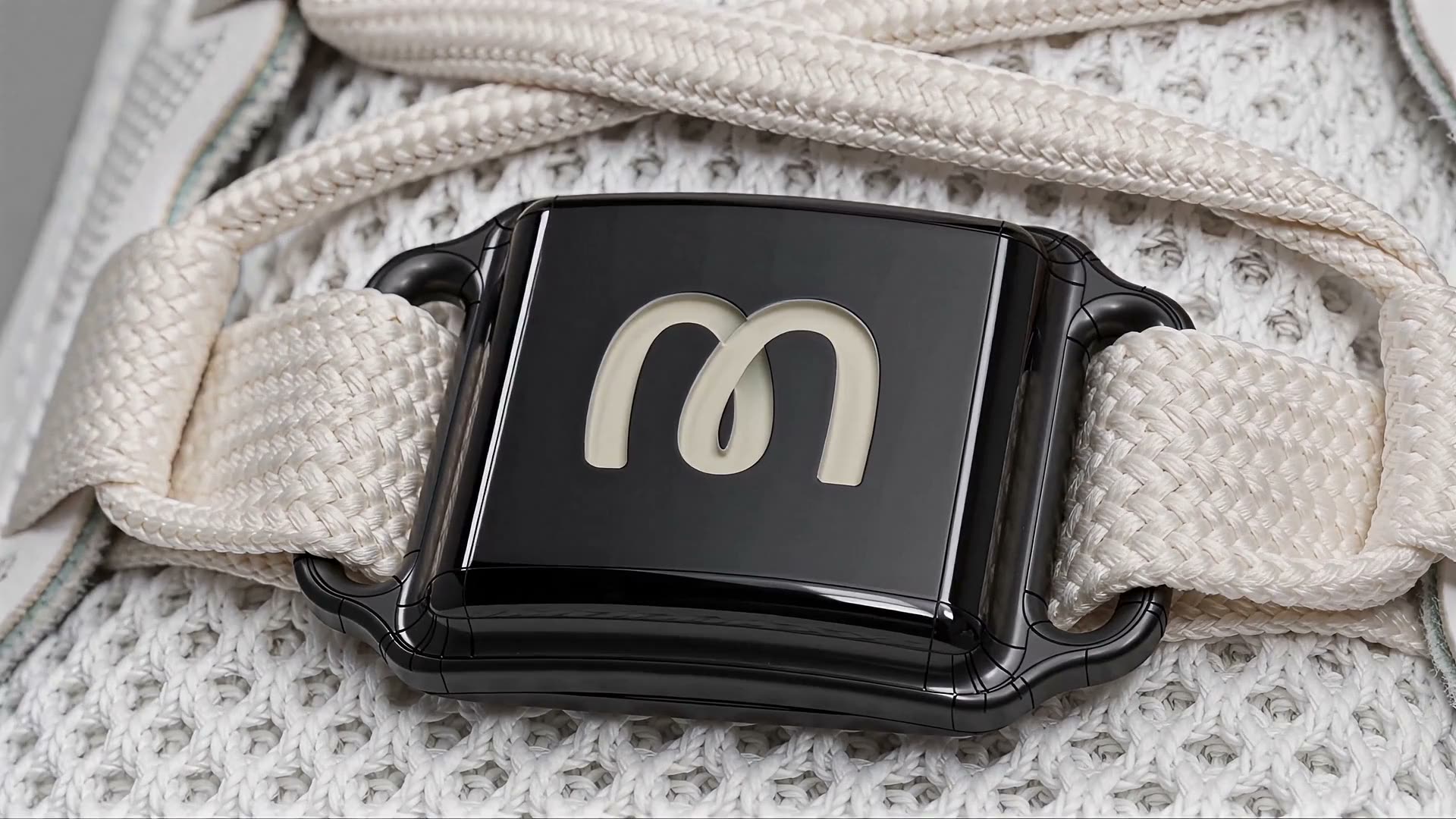
Two tags. One per foot. They measure how you move and how each shoe holds up, run after run.
The Black Box
Your shoe is wearing out. You can’t see it.
Cushioning collapses from the inside, run by run. The outside tells you nothing.
The Vision
Every shoe tracked builds what has never existed: a real-world biomechanical database.
Gait has only ever been measured in labs, for minutes at a time. mylz measures it outdoors, per shoe, over a shoe's whole life.
- 01 Capture both signals
Every shoe is recorded alongside the gait of the person wearing it.
- 02 Coverage compounds
Each runner and each shoe adds a new combination of body and footwear.
- 03 Answers only mylz can give
How this shoe behaves for a body like yours.
- 04 The loop closes
Better answers bring more runners, and every shoe they tag returns to capture.
The Data
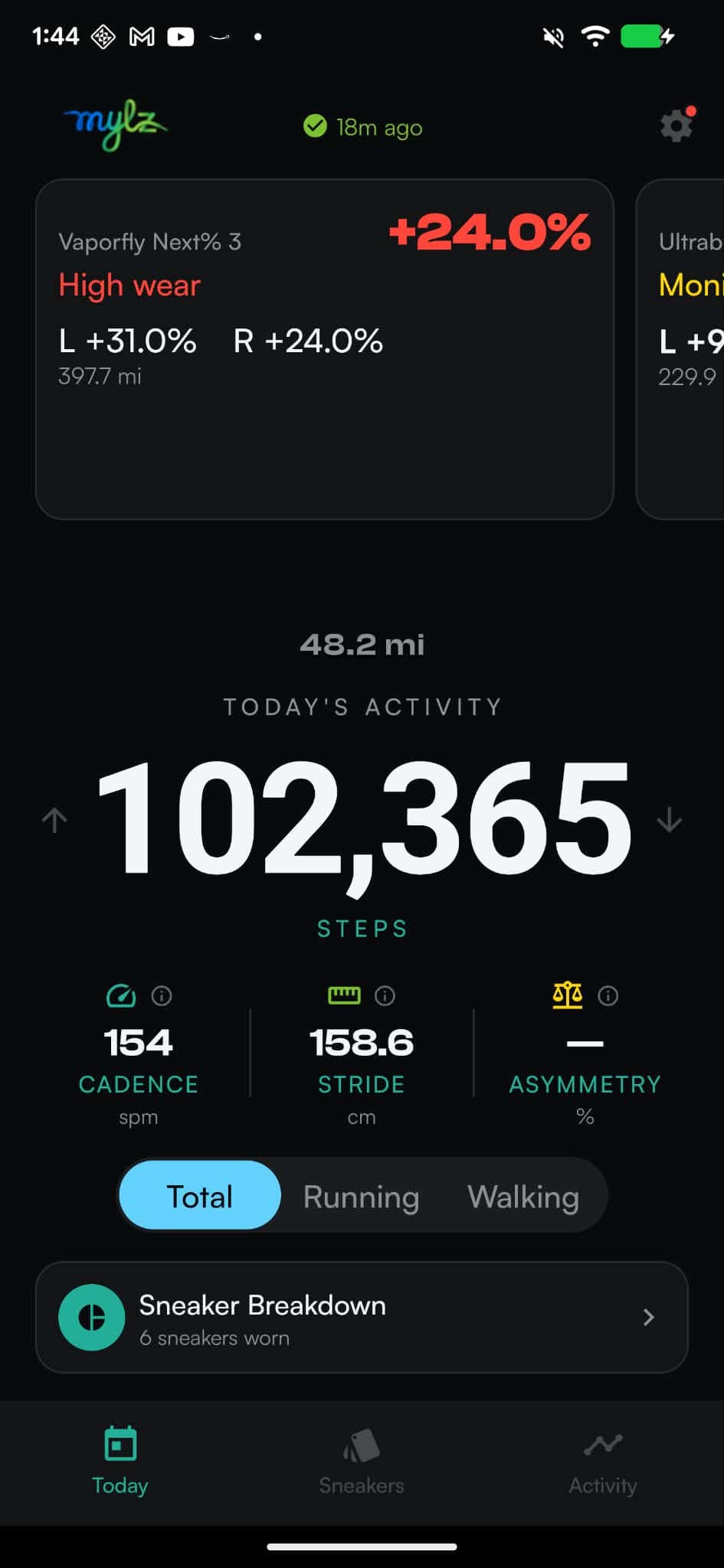
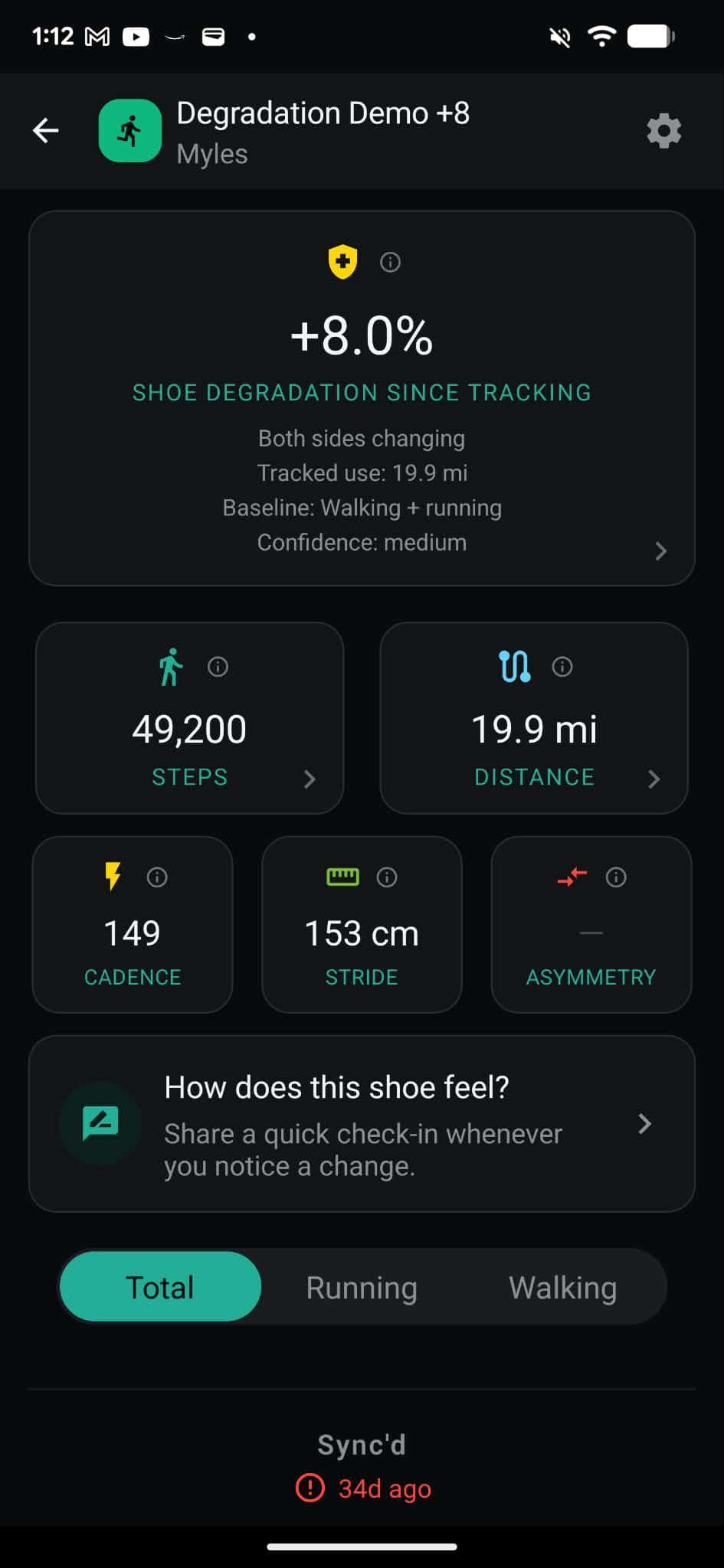
Five numbers.
Zero guesswork.
Four read your gait, one reads your shoe. Every number measured per foot and per pair, never estimated from your wrist.
FAQ
Questions runners actually ask
Wrist wearables infer your gait from arm swing. mylz sits at the foot and measures both feet directly, so cadence, stride and asymmetry are read where the running happens. Step detection currently runs about 98% accurate walking and 95% running, with lab validation booked at York University.
No. That test watches you walk, and walking is a different machine than running. Walking is a pendulum: one foot is always down and stance is about 60% of each step. Running is a spring: there is a flight phase with neither foot down, and vertical impact spikes to roughly 3× body weight versus about 1× walking. Judging your run from a walk is the wrong test — mylz measures your actual runs, both feet, outdoors.
Source: Novacheck, “The biomechanics of running,” Gait & Posture (1998).
Tags are $40 CAD per pair, a one-time purchase. The free tier covers what the tags are for: degradation, replacement guidance, mileage and rotation across every pair. A paid tier comes later for gait history, asymmetry over time, and which shoe to buy next. The core measurement is not paywalled.
Because one tag can only tell you about one foot. Your left and right legs do not do the same work, and asymmetry is one of the most studied signals in gait; it reveals uneven loading between your sides and uneven wear between your shoes. A single sensor, or a wrist device, has to assume your two sides match. mylz measures each foot on its own and compares them.
Close to none. Each tag runs about 365 days on a sealed coin cell — no cable, no dock, no nightly ritual. When one runs down you swap the cell. They are designed to IPX5 for rain, sweat and splashes, which is our design target rather than a tested certification, and they are not rated for submersion, so keep them out of the pool.
Any laced shoe. The tags thread into your laces and move with the shoe, so you can track one pair or your whole rotation, each with its own profile. Nothing is built in, so you are never locked to a brand.
It is a small closed alpha, 35 runners this September. Your runs become the first real-world record of how shoes wear and how people move in them, and in return you see metrics nobody else has yet. Your data stays yours; we use it to make mylz better, and we will not spam you or sell it.

mylz is part of ventureLAB's HardTech Portfolio.
Join the Alpha
We're running a closed alpha with 35 runners this September. Your runs are the first real-world data of its kind, and you see metrics nobody else has yet.
Updates
Notes from the lab
Product progress, gait science, and what we're learning from the alpha.
- August 3, 2026Two-Week Check-in #8: One step closer to alphaThe 32g test round came back at ~97.5% step accuracy across walking, jogging and running. Next is a Vicon system at York. Plus the site overhaul, and Strava on mylz.
- July 11, 2026Two-Week Check-in #7: Progress on all frontsThe 32g boards finally landed, you can now add a shoe by pointing your camera at it, and we got accepted into ventureLAB's HardTech Portfolio.
- June 25, 2026Two-Week Check-in #6: Walking vs RunningA store has you walk 10 steps to pick your running shoe. But walking isn't slow running, it's a different movement entirely. Plus we started calling kinesiology labs to pressure-test our metrics.